
- Home
- Government
- State Government
State Government
Palm Beach operates under the governance of the state of Florida, which is part of a broader system of state-level administration. The Florida state government, like others, functions within the framework established by the state constitution, granting it the authority to enact laws, regulations, and policies that affect residents’ daily lives. Florida’s government plays a key role in managing various essential services, ranging from education and healthcare to public safety, transportation, and economic development.
Learn about Florida’s executive, legislative, and judicial branches, including the State Supreme Court, Governor Ron DeSantis, and your elected representatives. Access resources on state laws, regulations, public services, and important matters affecting Palm Beach residents below.
The Florida judicial system consists of several levels of courts: the Supreme Court, five District Courts of Appeal, 20 Circuit Courts and 67 County Courts. The system is designed to ensure justice through both trial and appellate courts.
Trial Courts
Most cases begin in these courts, with evidence presented by both sides and decisions made by a single judge or jury. There are two main tiers: Circuit Courts for major criminal and civil cases and County Courts for less serious matters.
Appellate Courts
These courts review cases from trial courts but do not retry them. Instead, they focus on legal issues and ensure laws are applied correctly. The District Courts of Appeal have panels of three judges, while the Supreme Court of Florida has seven justices. Appellate courts do not have juries or rehear the facts of cases.
In every state, the executive branch is headed by a governor who is directly elected by the people. The governor is responsible for enforcing state laws, overseeing the state executive branch, and representing the state in various capacities.
Office of Governor Ron DeSantis 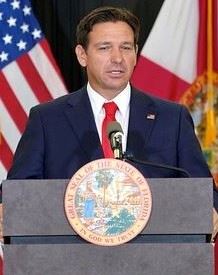
The Capitol
400 S. Monroe St.
Tallahassee, FL 32399-0001
tel:(850)717-0733
| Department | Purpose | Service |
| Department of Agriculture | Focus on farming, forestry, food safety, and nutrition | Assistance with food assistance programs, agricultural loans, or rural development initiatives |
Department of Commerce | Oversee economic growth, job creation, and technological innovation | Assistance with business resources, economic data, or the Census Bureau |
| Department of Defense | Responsible for national defense and military affairs | Assistance with veterans’ services, defense contracting, or military recruitment |
Department of Education | Ensure access to quality education | Assistance with student loans, grants, educational programs, or K-12 and higher education support |
| Department of Energy | Manage energy resources, nuclear security, and energy research | Assistance with energy efficiency programs or access to renewable energy incentives |
| Department of Health and Human Resources | Focus on public health, welfare programs, and social services | Assistance with healthcare services, including Medicaid, or support for public health initiatives |
| Department of Homeland Security | Ensure national security and emergency preparedness | Assistance with disaster response, immigration services, or cybersecurity support |
| Department of Housing and Urban Development | Manage housing policies and urban development | Assistance with affordable housing, home loans, or homelessness programs |
| Department of Interior | Manage national parks, public lands, and natural resources | Assistance with national park access, wildlife protection, or resource management |
| Department of Justice | Oversee the legal system, including federal law enforcement and civil rights | Assistance with criminal justice issues, legal aid, or federal investigations |
| Department of Labor | Oversee working conditions, employment laws, and labor rights | Assistance with job training, unemployment benefits, or workplace rights |
Department of State | Manage U.S. foreign relations and diplomatic efforts | Assistance with passports, visas, or international travel advisories |
| Department of Transportation | Oversee transportation infrastructure and safety | Assistance with vehicle registration, travel safety, or transportation grants |
Department of the Treasury | Manage federal finances, tax policies, and the monetary system | Assistance with tax filing, financial assistance programs, or economic policy information |
| Department of Veterans Affairs | Provide services to military veterans, including healthcare and benefits | Assistance with medical care, disability claims, or pension benefits |
All 50 states have legislatures of elected representatives who consider matters brought forth by the governor or introduced by its members to create legislation that becomes law. Typically, a bicameral system consists of two houses in the United States: a Senate and a House of Representatives. The legislative branch is responsible for creating and passing state laws, setting the state budget, and overseeing the executive branch.
The Town of Palm Beach lies within the 22nd House District and the 24th Senate District in Florida.
Florida House of Representative
Contact Representative Mike Caruso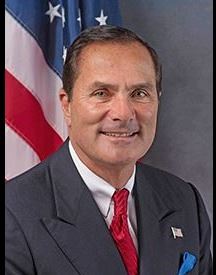
Capitol Office
214 House Office Building
402 S. Monroe St.
Tallahassee, FL 32399-0001
District Office
Suite 301
120 S. Olive Ave
West Palm Beach, FL 33401-5532
tel:(561)650-5532
Contact Senator Mack Bernard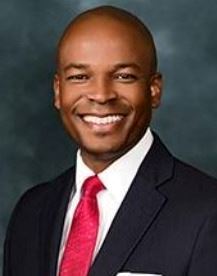
Capital Office
216 Senate Building
402 S. Monroe St.
Tallahassee, FL 32399-0001
Phone: (850) 487-5024
We recognize that Florida's agencies and departments are dynamic and constantly evolving. As the needs of the state and its citizens shift, so too do the structures and priorities of these organizations. We will do our best to stay informed and keep an eye on what's new and important, ensuring we remain aligned with the latest developments.
| Department | Purpose | Service |
| Division of Administrative Hearings | Review matters from state agencies and hearings appeals concerning agency actions | Provide fair hearings from disputes between citizens and state agencies |
| Promote agriculture, protects consumers, ensures food & product safety, and manages forestry resources | Manage agricultural promotion, consumer protection programs, and oversees food safety | |
| Florida Department of Business and Professional Regulation | Regulate professions and businesses to ensure quality services and ethical practices | Issue licenses and regulates industries such as real estate, construction, and healthcare |
| Offer a wide range of programs such as adoption services, childcare, mental health support, and financial assistance | Provide resources for child protection, mental health, drug abuse, and more | |
| Florida Department of Corrections | Manage correctional facilities and oversees offender information | Provide services for prisoners and ensures public safety through correctional programs |
| Florida Department of Education | Oversee K-12 education, vocational rehabilitation, and higher education | Provide resources for public schools, vocational programs, and universities |
| Florida Department of Elder Affairs | Offer programs and assistance for seniors, including retirement and health service | Provide resources and support for Florida’s elderly population |
| Florida Department of Environmental Protection | Coordinate emergency preparedness, recovery, and mitigation efforts | Manage waste, air quality, parks, and enforces environmental laws |
| Florida Department of Financial Services | Regulate banking, insurance, workers’ compensation, treasury and other financial institutions | Ensure the stability and integrity of financial systems in the state |
| Florida Department of Health | Manage public health programs, health care services, and oversees group living facilities | Provide health-related information and programs for residents' well-being |
| Florida Department of Law Enforcement | Oversee state law enforcement agencies and provides training | Coordinate crime statistics and criminal background checks |
| Office of the Attorney General. Responsible for protecting Florida consumers from various types of fraud and enforcing the states' antitrust fund | Provide legal representation for the state, enforces consumer protection laws and public safety | |
| Florida Department of Revenue | Manage state tax collections and child support services | Ensure the fair collection of taxes and supports financial assistance programs |
| Responsible for planning, designing, constructing, maintaining, and inspecting bridges across the state, while local municipalities handle smaller bridges within their jurisdiction | Provides assistance with road and bridge maintenance, traffic safety, public transportation information, permits, and local infrastructure projects | |
| Florida Department of Veterans Affairs | Provide services to military veterans, including healthcare and benefits | Veterans and their families may need help with medical care, disability claims, or pension benefits |
| Department of Military Affairs | Oversee Florida’s National Guard and military programs | Coordinate military services and supports veterans |
Current Issues:
Riveria Beach Mooring Field Permit
- Following the March 4, 2025, Town Council Meeting, the Palm Beach Civic Association published an article regarding the Riveria Beach Mooring Field Permit. Public comment on Riviera Beach’s state application can be mailed to Geneva Alpert at Geneva.Alpert@Floridadep.gov.
