
- Home
- Government
- Town Government
- Departments & Divisions
- Public Works
- Department Functions
Department Functions
Last Content Update:
The Engineering Division exists to apply sound engineering and architectural principles to plan, budget, design, and build infrastructure that maximizes functionality and minimizes maintenance, repair and replacement costs.
Responsibilities
- Prepare budget estimates for infrastructure projects
- Plan, design and oversee construction of public facilities
- Complete design, cost estimates, and construction of miscellaneous minor projects not planned or budgeted elsewhere
- Coordinate with other entities to address engineering issues and address complaints
- Continually seek new and better ways to provide our services
- Conduct development review and contract administration
Capital Improvement Plan
The Town's FY25 Capital Improvement Plan can be found in the FY25 Proposed Budget starting on page 204.
Right-of Way Manual
The Town's Right-of-Way Manual contains the standards applicable to public rights-of-way and easements within the Town of Palm Beach.
Woods Hole Group - Coastal Resilience Implementation Plan 2021
Woods Hole Group - Coastal Vulnerability Assessment 2019
Palm Beach Island Beach Management Agreement 2021
Click on a Reach section to view the details of each program. 
The Water Resources Division is proud to serve the residents and businesses of the Town of Palm Beach for their sanitary and stormwater needs. The Division protects residents' and businesses' health, safety, and property by effectively operating and maintaining stormwater and sanitary sewer systems.
Pumping & Collection Stations
The Water Resources Division operates and maintains over 40 sanitary sewer pumping stations and 13 stormwater pumping stations of various types and capacities. We also maintain over 70 miles of the mainline collection system with thousands of manholes and stormwater catch basins.
Managing Infrastructure
Here in Palm Beach, we experience approximately 62 inches of average annual rainfall, with some storms producing as much as 17 inches of rain in a single day, as was the case for some communities in Palm Beach County during Tropical Storm Isaac in August 2012. Managing the infrastructure that conveys all that water so we can reduce the risk of widespread flooding is both challenging and rewarding.
Stormwater Information
Some pump stations can move more than 100,000 gallons of water per minute. To put that number into perspective, it equates to filling an average-sized swimming pool in under 20 seconds. All of the stormwater is pumped, or gravity flows into the Lake Worth Lagoon, so it is extremely important that the Town and its citizens do everything possible to prevent pollutants from entering the collection system.
Sanitary Sewer System & Wastewater Treatment
The sanitary sewer system serves more than 10,000 year-round and more than 25,000 seasonal residents and many businesses and employees comprising the Islands’ population. The wastewater is collected through more than 41 miles of mainline sewer pipes of various sizes and transported to the more than 40 pumping stations on the island, where it is then pumped to a regional wastewater treatment facility in West Palm Beach. There, it is treated and recharged back to the earth and, in some cases, reused for industrial cooling water. These assets require daily maintenance and upkeep, and your Water Resources personnel have made a long-term commitment to fulfilling those needs. These are some ways your storm and wastewater professionals preserve and protect you and the environment.
The City of West Palm Beach's Public Utilities Department provides drinking water in the Town of Palm Beach. The Town is evaluating its water supply options ahead of the expiration of the current agreement in 2029.
Safe Water Dashboard
The City of West Palm Beach published a safe water dashboard on August 1, 2025. Please visit the dashboard.
Water Quality Reports
Each year, the City of West Palm Beach's Public Utilities Department compiles a Consumer Confidence Report or Water Quality Report that informs you where your water comes from and what’s in it. Please visit the City of West Palm Beach's Public Utilities webpage for more information.
Water Supply Feasibility Study
- Town of Palm Beach Water Feasibility Study April 2022
- Town of Palm Beach Water Supply Feasibility Study April Presentation at Town Council Meeting
- Town of Palm Beach Water Supply Feasibility Study May Presentation at Public Works Committee Meeting
- Town of Palm Beach Water Supply Feasibility Study July Presentation at Town Council Meeting
- Town of Palm Beach Water Supply Feasibility Study August Presentation at Public Works Committee Meeting
- Town of Palm Beach Water Supply Feasibility Study December 2022 Presentation at Town Council Meeting
The Electrical Bureau takes care of the electrical needs for a multitude of systems and automatic controls throughout the Town. There is over 30 miles of underground cable that supply and monitor the electrical infrastructure. The Electrical Bureau is always looking for methods to improve the efficiency of the Town’s electrical systems.
Street Lights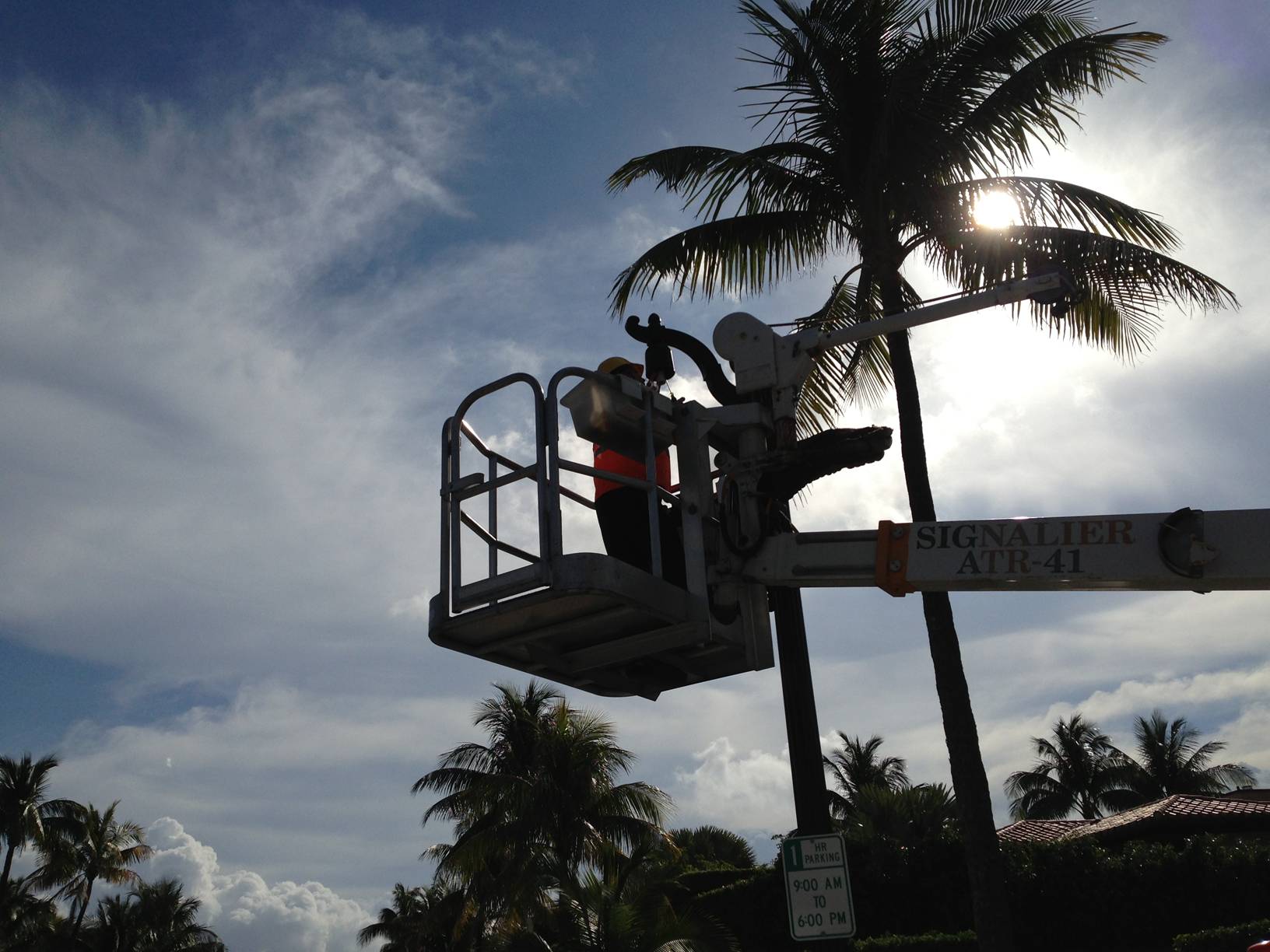
The Electrical Bureau maintains over 1,000 street lights and more than 50 different control systems. They perform quarterly night time surveillance to ensure the lights are functioning properly.
Traffic Signals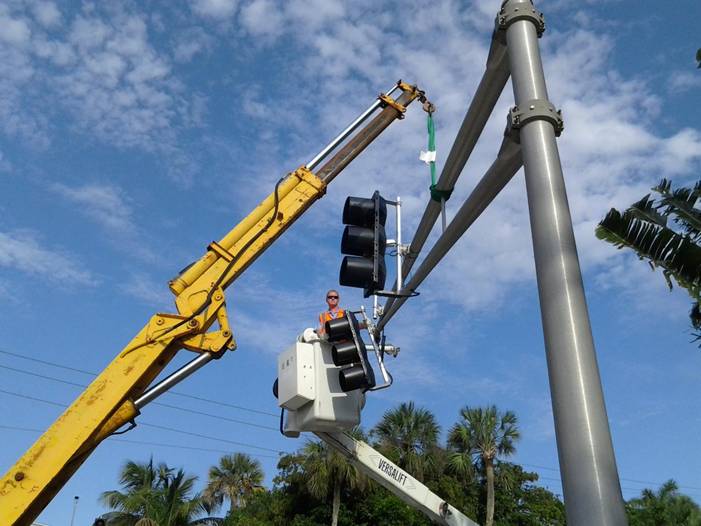
The Electrical Bureau maintains and inspects all signalized traffic intersections. The intersections are monitored from the Public Works facility and repair times average less than two hours.
Administration
The Public Works Administration staff handles the typing, mailings, record keeping, project filing, agreements, easements, and contracts related to the Public Works Department. Administration staff also provides support and assistance to the divisions that maintain the infrastructure of the Town. Administration staff also provides service related to any calls, concerns, or inquiries related to Public Works.
Fleet Maintenance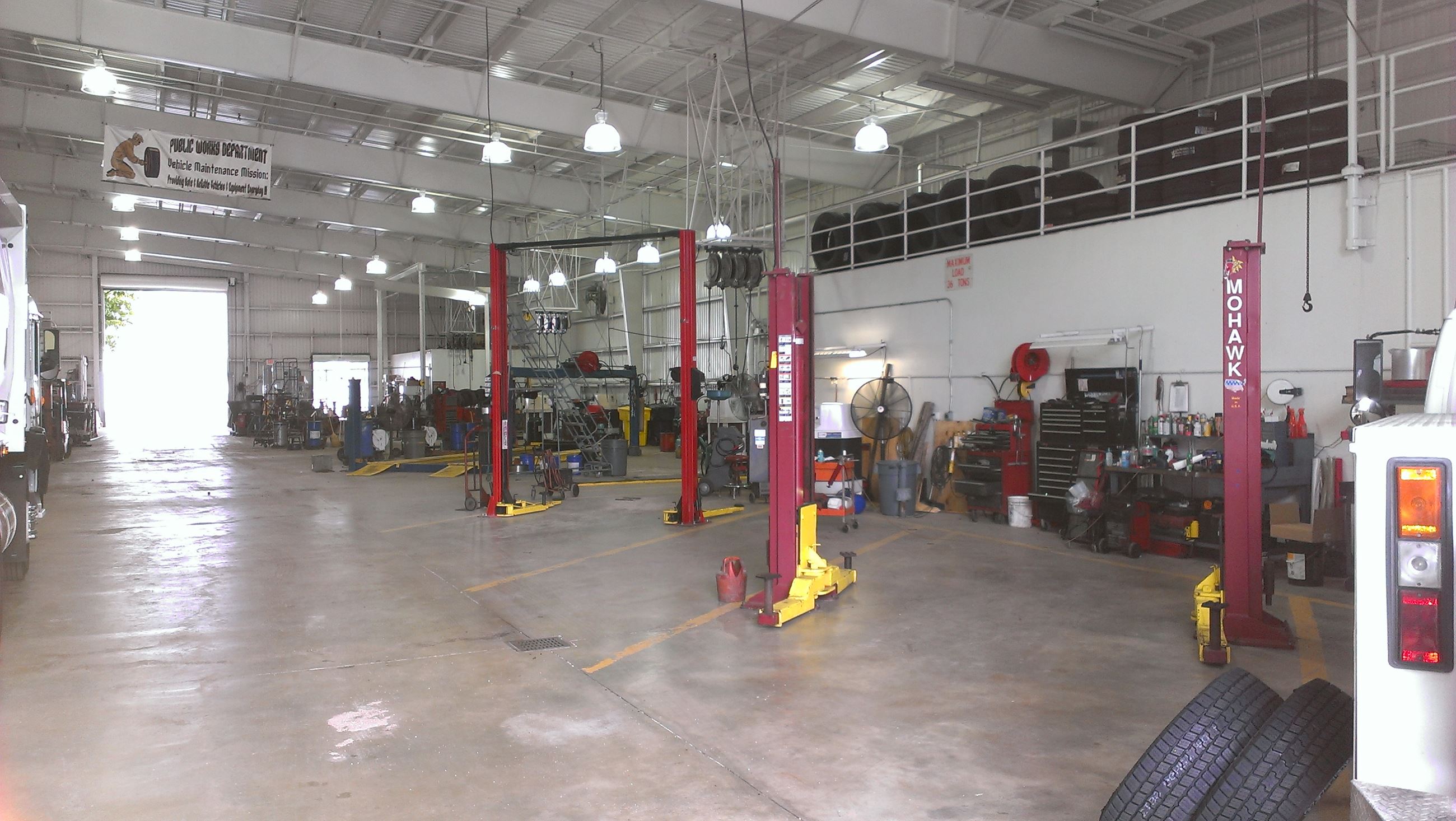
The Fleet Maintenance Division provides routine maintenance and repair to the Public Works Department's vehicles and equipment. Staff performs predictive and preventative maintenance tasks to ensure all equipment is in safe working condition and performing to specification to maximize efficiency and life cycle. Fleet Maintenance also provide services to other Town departments.
Waste Collection
Two bureaus manage different types of waste collection in the Town. The Sanitation Bureau manages garbage and recycling collection, while the Trash Bureau manages vegetative yard trash. There is also a Special Collection Service offered for a fee for "white goods" and other bulk items.
ACCESS COLLECTION SCHEDULES FOR GARBAGE, RECYCLING AND VEGETATIVE YARD TRASH
Sanitation Bureau
Collection & Disposal of Garbage & Recycling
The Sanitation Bureau Division provides for the collection and disposal of residential and commercial garbage and recycling. Workers collect the garbage by means of various-sized compaction trucks and transport the material to the town’s transfer station, where it is unloaded into large compaction trailers, then transported to Solid Waste Authority for final disposal.
Recycling
As part of the daily routes, workers also collect garbage and recycling from public containers throughout the Town. Recycling is collected using specialized side-load trucks, separating material types and then transported to the Solid Waste Authority’s recycling centers for processing. For a detailed description of allowable materials and other information regarding the recycling process, please visit SWA Recycle Right.
Profit Sharing with SWA
The Towns participation in an inter-local profit-sharing agreement with SWA provides a revenue stream back to the Town of Palm Beach with the sale of the collected commodities. Participation in the recycling program is encouraged to generate revenue and reduce disposal costs.
Solid Waste Authority Recycling Information
SWA Has available to Palm Beach County residents an Recyclopedia. Within the Recyclopedia, you will find information that you need to Recycle Right. If you have any questions, you can call the Public Works Department at (561)838-5440 .
.
Solid Waste Authority Tips
SWA Household Hazardous Waste : Dispose Of Your Household Hazardous Waste at SWA for Free
Solid Waste Authority Household Hazardous Waste Tip #1: Home Chemicals - Save your shelf this spring by cleaning out home hazards from sheds, garages and under sinks. Cleaners, paints, pesticides and automotive products have no place in the regular trash or down storm drains where they can expose people, pets and our environment to harm. Instead, Palm Beach County residents can dispose of their unwanted chemicals at any of the SWA's seven convenient drop-off locations for FREE.
Solid Waste Authority Household Hazardous Waste Tip #2: Fluorescent light bulbs use less electricity than a standard incandescent bulb, last longer, and give off less heat, making them a cost-effective lighting alternative to regular incandescent bulbs. However, fluorescent lamps do contain mercury, and should not be thrown away in the trash.
Palm Beach County residents are asked to bring their used fluorescent bulbs, and other mercury containing devices such as thermostats, thermometers, electrical switches and liquid mercury, to their nearest SWA Home Chemical and Recycling Center. Palm Beach County residents can dispose of these unwanted chemicals for FREE at any of the SWA's seven convenient drop-off locations.
Solid Waste Authority Household Hazardous Waste Tip #3: Rechargeable Batteries Can Cause Fires if Put in Recycling Bins or Trash Throwing rechargeable batteries into a recycling bin or the garbage can put property and people’s lives at risk. In fact, fires traced to lithium-ion batteries have been reported at recycling facilities nationwide, and fires have started in the garbage trucks that go to your home.
Rechargeable batteries power our cell phones, laptops, cordless power tools and even hover boards. These batteries have components that are flammable. If the battery is shorted or damaged, it heats up and produces oxygen, which facilitates combustion.
Fortunately, Palm Beach County residents can dispose of rechargeable (non-alkaline) batteries for free at any of the SWA's seven Home Chemical and Recycling Centers.
Regular alkaline batteries (AA, AAA, C, D and 9 volt) can be placed in your garbage. But any other type of battery (rechargeable, nickel-cadmium, automotive, lithium-ion, cell phone, lead-acid) should be dropped at one of the SWA’s Home Chemical and Recycling Centers.
In addition to these locations, many major retailers will recycle batteries for free, and have drop-off containers placed near the front of their stores. Commercial quantities of batteries may require special disposal. Call 561-687-1100 for details on recycling batteries from your business.
Learn more about how to properly dispose of batteries with the following resources:
- Watch the SWA’s lithium-ion battery commercial
- Check out the SWA’s video about the dangers of putting combustible items in your trash
- Review the Florida Department of Environmental Protection’s Homeowner’s Guide To Battery Recycling And Disposal
Remember, pollution prevention starts at home. A full list of household hazardous wastes can be found at SWA's Home Chemical and Recycling Center website or by calling (561) 697-2700 or 1 (866) SWA-INFO to learn more about the Solid Waste Authority of Palm Beach County’s Home Chemical and Recycling Centers.
Trash Bureau
Vegetative Yard Trash
Provides for the collection and disposal of the vegetative yard trash and operation of the two Town owned vegetative landfills. Crews collect the material placed curbside by means of articulated crane equipment and loaded into dump trucks. The materials are transported to the vegetative landfill where it is spread, compacted, and left to decompose.
Please be advised that the placement of yard debris for collection must be compliant with the regulations set forth in the Code of Ordinance Sec. 102-45. Curbside placement and collection of trash. Item 1 and 2 below from this section apply to private service areas on or adjacent to the public right of way that are visible from the public right of way. Trash placed for collection by a property owner, occupant or agent shall be in compliance with the regulations hereinafter set forth:
1.) In the months of November through and including the month of April, trash may be placed on the public right of way, adjacent to the property from which it came, not more than one day prior to the schedule day of collection.
2.) During the months of May through and including the month of October, trash may be placed on the public right-of-way, adjacent to the property from which it came, not more than three days prior to the scheduled day of collection.
(TOWN CHARTER & CODE OF ORDINANCE SEARCH)
Service Information
Special Collection (Pick-up) Service is offered throughout the Town to dispose of white goods and other bulk items that cannot be placed in dumpsters or for regular garbage service. Service is only offered on Fridays and is on a first-come, first-serve basis. Service needs to be scheduled in advance by contacting the Public Works Department at (561) 838-5440.
Payments
Special Pick-ups are a fee-based service. Payment must be received at pick-up by check and payable to the Town of Palm Beach. Payment can be made in advance at Town Hall by check only, or a check can be left with the items on the pick-up day.
If you would like, estimates can be made before the pick-up schedule. However, they must be requested at least two (2) days before the scheduled pick-up date.
The fee is based on the load size, and are as follows:
| Truck load size | Fee |
|---|---|
| 25% | $105.60 |
| 50% | $211.20 |
| 75% | $316.80 |
| 100% | $420 |
Item Placement
All items must be outside the dwelling/garage and not in the right-of-way (road or sidewalk). If the location is a condominium, the building management will designate the outdoor area for service placement, most often by the dumpsters. Staff is prohibited in enclosed structures (i.e., homes, garages, apartments, etc.).
Eligible Item
- Furniture, mattresses, chairs, sofas, tables, etc.
- Lawn chairs, tables
- Miscellaneous home goods (i.e., toasters, refrigerators (no larger than residential double wide), ovens (residential size), TVs, microwaves, lamps, carpeting (no longer than 8 feet, rolled up and tied)
- Packing boxes that you do not want to break down and recycle. Note: packing peanuts (Styrofoam bits) must be in garbage bags or secured in boxes.
Ineligible Item
- Construction debris (e.g., steel, glass, brick, block, concrete, asphalt, roofing material, pipe, gypsum wallboard, lumber, plywood, cabinetry, pallets, fencing, stumps, etc.)
- Hazardous materials (i.e., car batteries, propane tanks, fluorescent lights, gasoline, paint)
- Yard debris
Please note:
- Anticipated times of arrival are unavailable. Staff schedules their route on the day of pick-ups.
- There are no scheduled pick-ups during Town holidays.
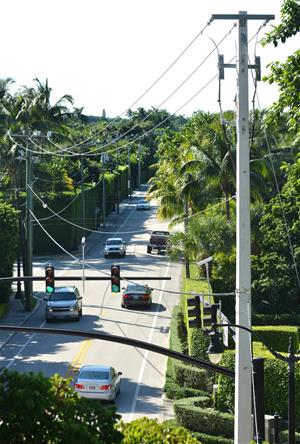 Undergrounding
Please refer to the Town's Undergrounding website and the dropdown tabs below for more information.
IMPORTANT NOTICE: POWER LINES SPARKING OR OTHER HAZARDOUS CONDITIONS
- If you see power lines sparking or other hazardous conditions, call 911 immediately and contact FPL at 1-800-4OUTAGE / 1-800-468-8243.
- If you have ongoing reliability concerns, FPL recommends subscribers call their customer service department or go to FPL's website to report the problem.
In 2006, the Town of Palm Beach commissioned a study titled “Conversion of Aerial to Underground Utilities Analysis” by “R.W. Beck, Inc.”. This study aimed to “perform a high-level review of the current cost estimates the Town is utilizing in its analysis (Project)”. At the time, the estimated cost for the undergrounding effort was “roughly $60.3 million”. The current estimate for this undertaking is estimated at $90 million by the Town.
This study did not trigger a Town-wide conversion process. In the following few years up to the present times, each neighborhood decided to perform undergrounding projects on an “as requested” basis. While the pace of this effort has varied from year to year, it has yielded a handful of completed projects, and a couple more are currently in progress. Worth Avenue’s reconstruction also received the benefit of this approach. These smaller isolated projects have typically started with the efforts of a single motivated resident (The Champion). The Champion would then attempt to garner the support of his/her surrounding neighbors, and through coordination with Town staff, a logical project boundary would be determined. From that point, if two-thirds of the residents within that boundary voted to go forward, the Town would proceed with the planning/design and construction process. The design and construction cost would then be assessed to all the residents of that particular street based on a model designed by “Willdan Financial Services” in October 2009 titled “Town of Palm Beach Utility Undergrounding Assessment Methodology.” That model determined a group of weighted factors that could be applied to each property within the Town. While these projects have been successful, they have been on such a small scale that they have little effect on the overall appearance and utility reliability of the Town. A more comprehensive approach was needed.
In recent years, the town's residents have been increasing their motivation to expand the undergrounding program to cover larger areas. This movement culminated in the October 14, 2014, Town Council meeting, where FPL presented the need to improve or “harden” large portions of the Town’s existing overhead utilities. That hardening effort, triggered by FPL’s recognition of their facilities’ conditions, would include replacing many existing wood power poles with larger and taller concrete power poles. Within the context of previous and ongoing conversations between the residents, Council members, staff, and consultant(s) regarding a more “regionalized rather than local” approach to undergrounding the Town, the hardening proposal by FPL became an added impetus to view the large scale undergrounding as an alternative whose time had perhaps come.
After in-depth deliberations, the Town Council unanimously decided to pursue Town-wide undergrounding. A ballot question regarding the financing of the Town-wide project was approved in March 2016, and the master planning and design work are underway.
The work to convert to underground facilities is not as intrusive as one might think, thanks to major advances in the use of horizontal directional drilling (HDD) equipment, which greatly reduces the amount of disturbance in the construction zone.
Transformers
- Transformers will be placed on the ground atop a concrete pad at locations depending on electrical demand and their current overhead location. A small easement may be necessary at each location to place the transformer if the unpaved portion of the right-of-way cannot be used for the same.
Lateral Lines
- Before construction begins, a review is undertaken at each property to determine the current point of service, the location where the lateral line from each home connects to the utility company distribution line out by the street, to ensure it is up to code or if there is any need for the location to be changed. The need for this to be changed is rare because, since 1982, the Town has required all individual service laterals to be underground. This review ensures we know where the point of service is or will be so that if any work associated with the lateral location is required, this can be planned for and done in a timely manner in keeping with the construction schedule.
Horizontal Directional Drilling
- The first step in the construction process will begin with construction equipment and materials, such as conduit, being placed at a “laydown” area to be determined. At each location where there will be a new ground-mounted transformer if the unpaved portion of the right-of-way cannot be used, the contractor cuts the street pavement to remove it and then digs a small pit. The same is done at the location of the next transformer north or south of the first location, depending on which direction the contractor chooses to work. The HDD equipment, about the size of a small sub-compact automobile, is then brought to the site of the first pit to drill a pathway under the street pavement from one pit to the next, wherein the conduit for utility lines will be run. Once the conduit is installed, it is capped, and the process described continues down the street until it is finished.
Connecting the Lines
- Upon completion of the conduit installation, the contractor begins running the lines in the conduit, connecting the lines to the transformer, and then from the transformer to the point of service at your home. Until now, your property will have received service from the overhead facilities. Once connected to the new underground network, you will no longer receive electric service from the overhead facilities. This switchover takes a couple of hours to complete at each residence. You will have no service during this time so the work can be done safely. The date and time of the switchover will be made known to you in advance so that you can plan accordingly.
Removal of Overhead Lines & Poles
- Once the switchover to the new network is complete and the overhead facilities are no longer in use, FPL crews are called upon to remove all overhead lines, transformers, and poles. Upon completion, the contractor, or the chosen landscaping subcontractor, begins restoring landscaping in easements or the right-of-way to screen the transformers acceptably, unless the property owner prefers to do it.
Punch List and Completion
- When the landscaping is completed, and the contractor has met all terms and conditions of his contract with the Town, including correcting any punch list items noted in the final inspection, the underground conversion will be completed. At this point, if the contractor had to cut the road to provide service, those roads that were cut would have been milled and resurfaced in accordance with town requirements. Repaving at this time is predicated upon all planned public utility upgrades being completed if their renewal or replacement is determined to be required at this time.
Special Assessments
The Town of Palm Beach has utilized the special non-ad valorem assessment process, as enumerated in Florida Statute 197.3236, for the two neighborhood projects identified above, as well as the streetscape projects on Worth Avenue and in the 400 block of Peruvian Avenue. The law allows the town to initiate the assessment process for town capital projects the Town Council deems appropriate for the assessment process or for neighborhood capital projects desired by residents to be undertaken by the Town on their behalf.
Cost to the Property Owner
As stated earlier, this is a capital project assessment process. This means, among other things, that the benefiting property owners are charged for their share of the cost of the work. This process results in the share of the project costs being placed on annual property tax bills, but it is not a tax, it is an assessment. The property tax bill is simply a billing mechanism the town uses to avoid creating a separate internal billing and collection function to handle payments.
Billing Mechanism
The Town of Palm Beach reserves the right to select the manner in which property owners will be charged for the cost of the proposed capital project. Baring unusual circumstances, the billing mechanism to be utilized will be the uniform method for levying, collecting and enforcing non-ad valorem special assessments as authorized by Section 197.3632, Florida Statutes. As such, charges to property owners may appear on one’s property tax bill for up to 10 years or more. This billing mechanism is subject to change in the sole discretion of the Town Council.
Capital assessment projects requested by residents are only constructed pursuant to industry and/or town standards. The final actual costs incurred by the town are the basis for what a property owner repays to the town regardless of any cost estimate provided in association with the project.
Please click on the following links to view videos related to this important work.
